
How I clean your windows
This is exactly how a clean runs, from the moment I arrive to the final walk-through. I love what I do, and I want you to know what to expect before I knock on your door.
Get my price
Before I start
The walk-around
When I arrive, I say hi, and you show me all of the windows and glass being cleaned. That way nothing gets missed, like a room that's easy to forget or a door that's closed. It's also the time to point out any problem spots, such as mould on a window or fly screen, or stickers that need to come off. And please introduce me to your pets. I love dogs.
Once I've seen everything, I work out what equipment I need and bring it in.
Why I like you to be home
For a first clean, I prefer you to be home at the start and the end. You're welcome to head out in between. The first walk-through means I understand exactly what you'd like done, and I can point out anything I might not be able to do. The final walk-through means you're happy with everything before I go, so nothing is missed because of a miscommunication.
For recurring cleans I still like to do a final walk-through with you, but it's not as necessary.
What I bring in
My duffel bag has my squeegees, mop, spare steel wool, a scraper, clean towels and other bits and bobs. If the job needs it, I'll also bring in my vacuum, extension pole, inside ladder or step stool.
Inside first
I almost always start with the inside. The only exception is when I know unsealed frames will leak water once I use the water-fed pole outside. Then I sometimes start outside instead.
I start on the ground floor and go window by window, then I do the inside upstairs. At each window:
If a blind is in the way of the fly screen, I take it down and rehang it at the end.
The fly screen comes out. If it only has a bit of dust on it, I vacuum it. If it's dirtier, it gets washed.
If tracks and sills are part of your job, I clean them first.
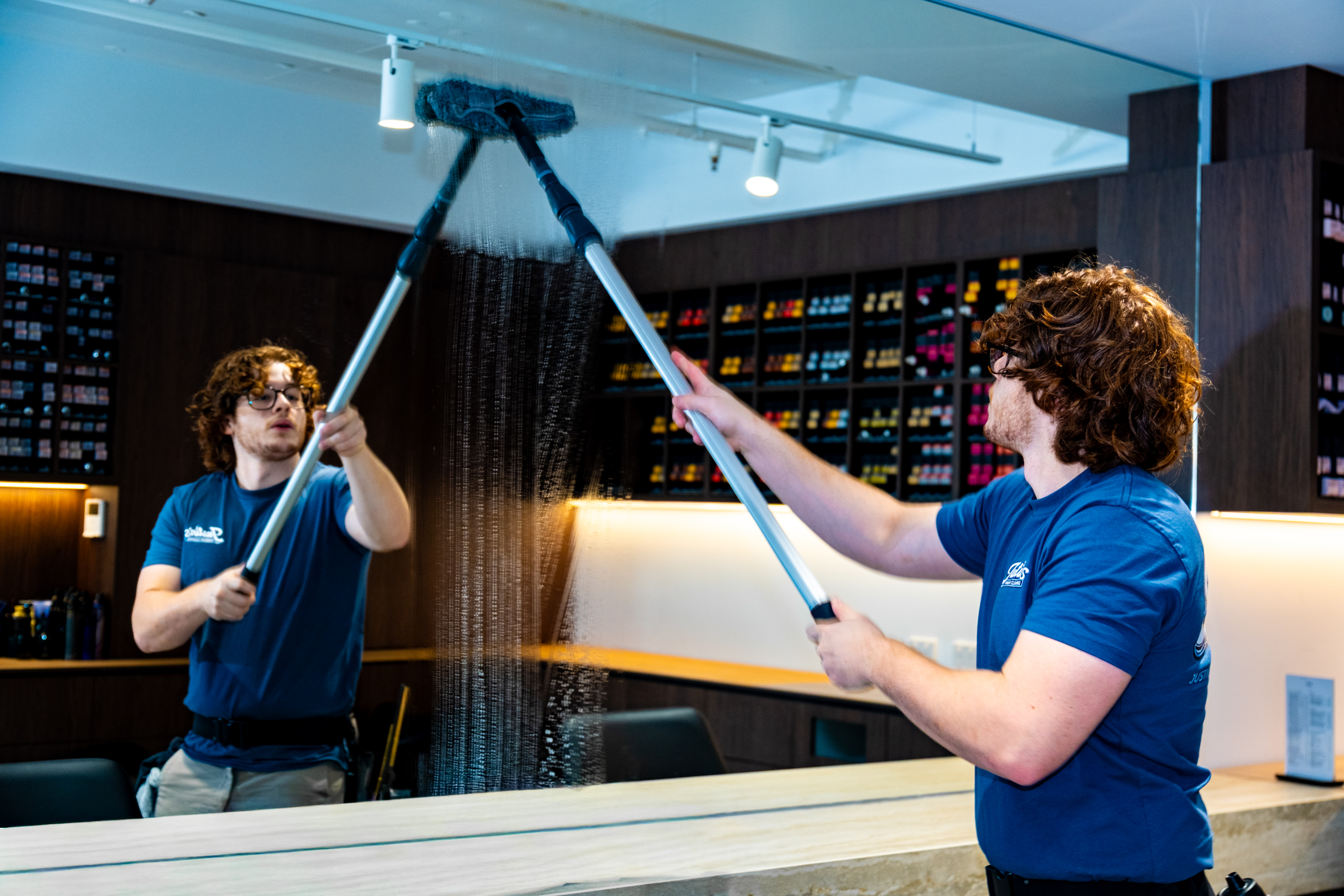
I scrub and wet the glass with a mop, using water and regular dish soap. Enough water to wet the window, but not so much that it drips on the floor.
On a Full Detail, every window also gets super-fine, non-scratch steel wool.
I squeegee the water off the glass, dry any wet edges of the glass and frame, and wipe the frame with a small towel.
A vacuumed fly screen goes straight back in. Then on to the next window.
Keeping your floors dry
Drop towels go under windows that don't have a raised frame, where water would drop straight onto the floor. That's usually sliding doors and floor-to-ceiling windows or glass doors. I very often use a two-handed method with the mop to catch drips, or other methods depending on the window. If a drip does land, I wipe it up straight away.
Furniture and blinds
It helps if you can clear your window sills and move furniture away from the windows. If something is blocking my access, I move it if I can, and put it back where I found it. If it's fixed or can't be moved, I work around it.
The Full Detail
Every first clean includes a Full Detail, except double-storey exterior-only cleans. On a Full Detail, I use super-fine, non-scratch steel wool on every window, except harder-to-reach second-storey exterior windows. This usually removes everything that's on the glass.
I only use the scraper when there's paint, stickers or a bigger mess that won't come off with steel wool. And steel wool is never reused.
Then the outside
Second storey
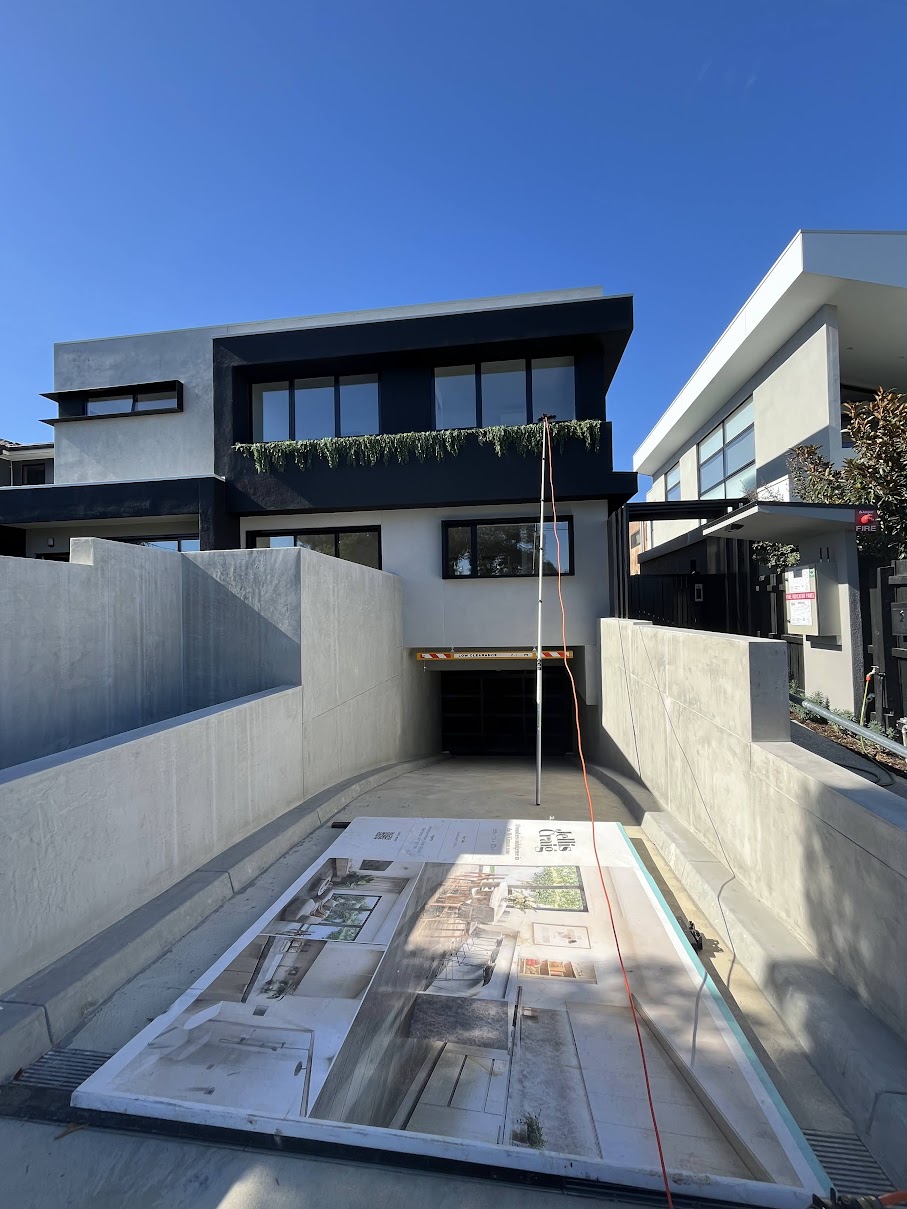
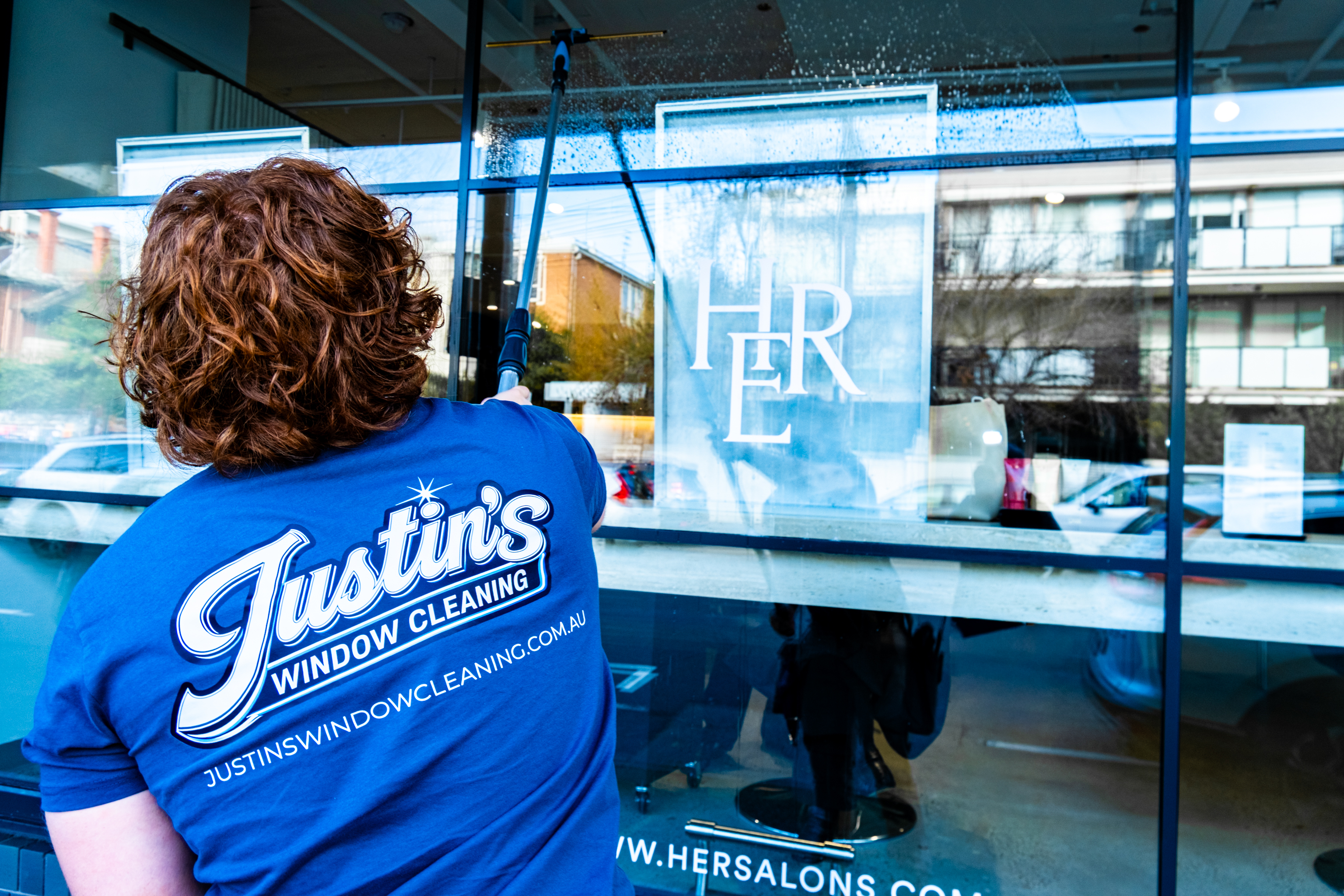
I use a brush on a very long extension pole that sprays purified water. It agitates and washes off the dirt, then dries without leaving any marks. If a window is hard to see from the ground or sits above a garage, I'll use a ladder to get onto the garage or first-floor roof. I'm always very safe on a roof, and I only go onto flat roofs.
Ground floor
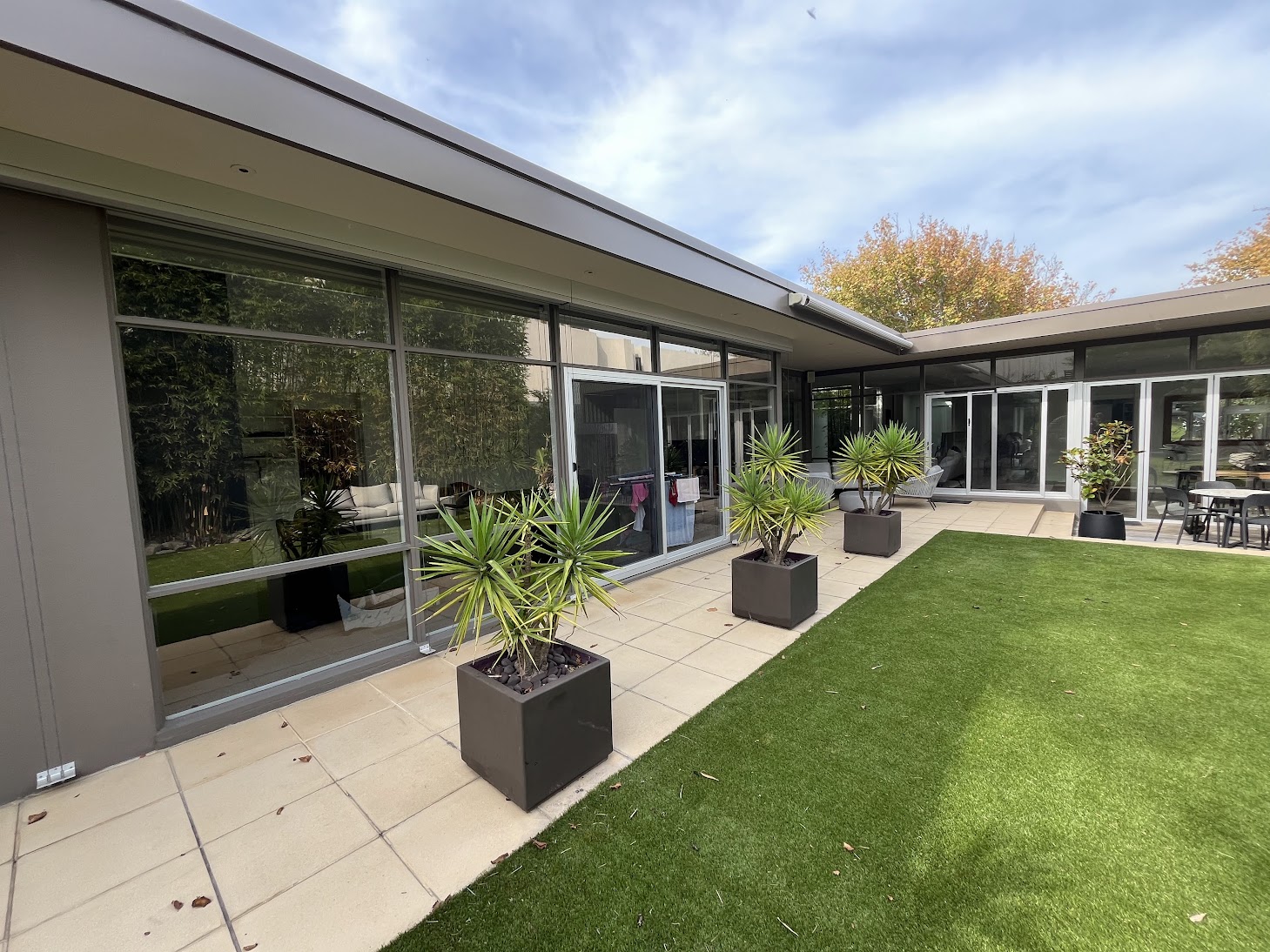
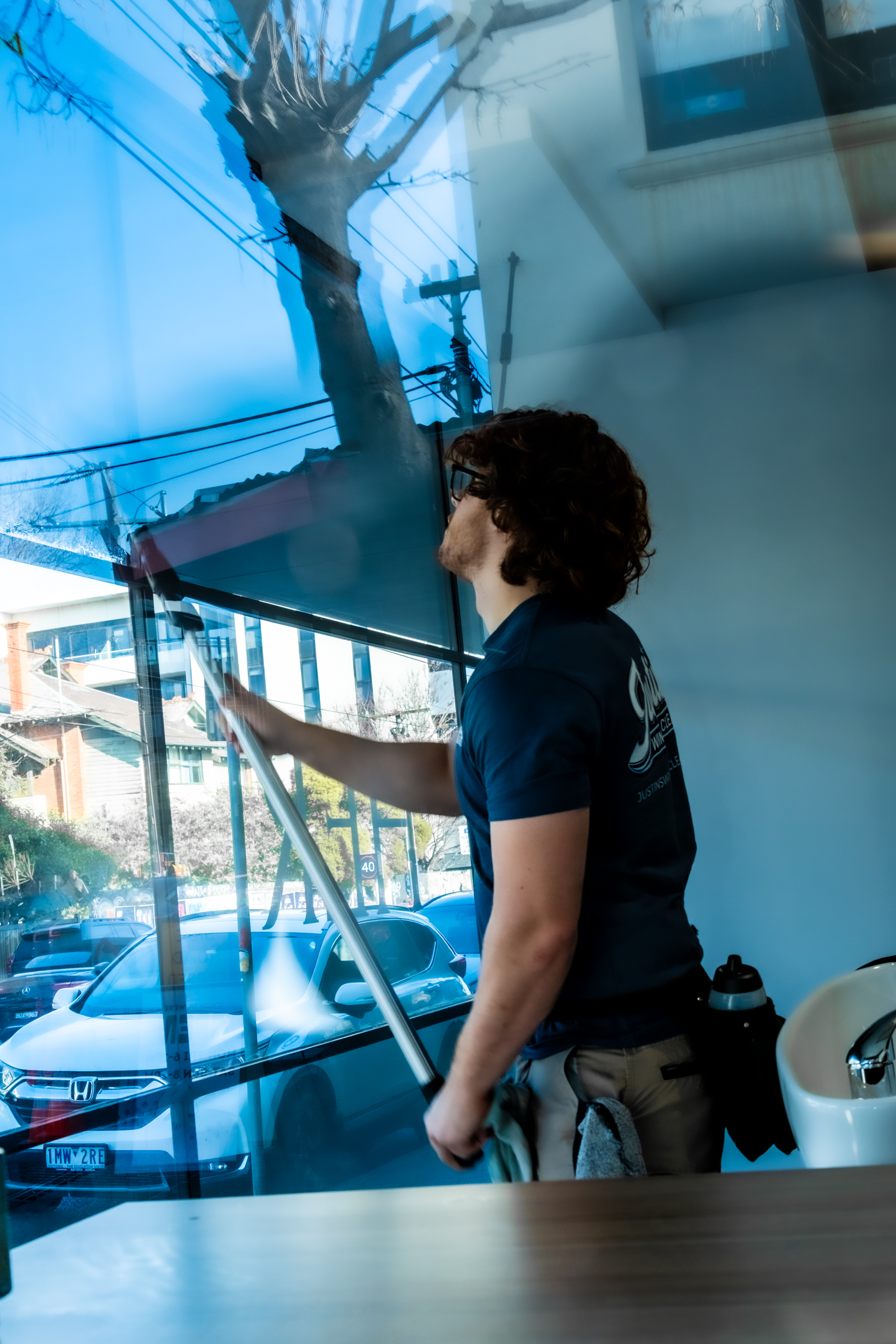
For the ground floor outside, I use the mop and squeegee, with steel wool on a Full Detail, or the water-fed pole. I decide based on the window seals. The water-fed pole can give a better result because it never leaves streaks, but if the seals aren't perfect, the mop and squeegee are easier. On a single-storey home I rarely use the pole, only when the seals are really good and it's practical.
Fly screens and glass
Fly screens with only a bit of dust on them are vacuumed. Dirtier screens are washed. Before I start on the outside windows, I mop each screen down, rinse it with a hose and let it air dry. Then they all go back in at the end of the job.
Pool fences and interior glass balustrades are cleaned during the same process.
The final walk-through
I always like you to be home when I finish. We walk through together so I can show you everything I've done, you can admire your clean windows, and you can let me know if you'd like anything touched up before I go.
Once you're happy, I ask you to pay before I leave, by bank transfer or cash.
How long it takes
A first clean
A first clean of a single-storey, 4 bedroom home with a track and sill clean takes about 4 hours. The same clean of a double-storey, 4 bedroom home takes about 6 hours.
Exterior only
An exterior-only clean takes 45 minutes to 2 hours for a single-storey home, and 1 to 2 hours for a double-storey home.
Recurring cleans
Recurring cleans can be much quicker than a first clean.
These are all averages. Times vary with the number of bedrooms and fly screens, any pool fences, and how dirty the windows are.
If it rains
If it's going to rain all day, I like to reschedule. I want you to be able to enjoy clean windows after I leave.
If it's raining but looks like it will stop in the next hour or two, I'm happy to come and start on the inside, then do the outside once the rain has stopped. Otherwise, I finish the inside and come back to finish the job as soon as I can fit it in.