
When someone installs solar panels, the conversation is almost entirely about output - kilowatt hours, feed-in tariffs, payback periods. Very rarely does anyone mention what happens to that output when the panels get dirty. And in Melbourne, they get dirty. Here's the honest evidence on whether cleaning actually makes a difference, and what professional solar panel cleaning involves.
The numbers
A BP Solar study found heavily soiled panels can lose 25% or more of their rated output. For a 6.6kW Melbourne system generating ~25 kWh per day, that's up to 5 kWh lost daily - equivalent to running two loads of washing. At current electricity prices, that adds up meaningfully over a year.
How much energy do dirty solar panels actually lose?
Research from the University of San Diego (a climate broadly comparable to Melbourne's) found that soiled solar panels lose an average of 7.4% efficiency in the first month after installation. In Australian conditions, the realistic figure for Melbourne residential panels that haven't been cleaned in 12+ months is typically 10–20% efficiency loss.
The payback from cleaning is essentially immediate. If your panels recover even 10% efficiency, the first month of improved generation typically covers the cost of the clean.
What causes the buildup on Melbourne solar panels?
Melbourne's combination of geography and climate creates specific soiling challenges:
🐦
Bird droppings
The most significant cause of localised efficiency loss. A single dropping shades a cell completely - and because solar panels wire cells in series, one shaded cell can disproportionately reduce the output of an entire string.
🌸
Pollen
Melbourne's spring pollen season is severe. Fine pollen particles accumulate on the glass surface, creating a light-diffusing layer that reduces direct irradiance.
🌫
Dust and particulate
Bark, dust and construction particulate settle on panels and form a grime layer when moistened by dew or light rain.
🌊
Coastal salt (Bayside)
For Brighton, Sandringham and Hampton properties, salt deposits from Port Phillip Bay air are a real factor - particularly in winter with prevailing southerly winds.
Does rain clean solar panels?
This is the most common misconception about solar panel maintenance. Light rain will wash off some loose, surface-level dust - but it won't remove bird droppings, pollen residue, insect debris or the sticky grime layer that accumulates in humid conditions. In fact, light rain without enough force to wash panels properly can make things worse by turning fine dust into a muddy film that dries harder than the original dust.
Quick test
Look at your panels on a clear day. If you can see a visible film, haze or any spotting, rain isn't doing the job.
How do professionals clean solar panels?
The professional method is straightforward but important to get right:
Pure water only
No chemicals whatsoever. Chemical cleaners can degrade the anti-reflective coating on solar panel glass, permanently reducing efficiency - and voiding most manufacturer warranties. Only deionised or reverse-osmosis purified water is used.
Soft brush poles
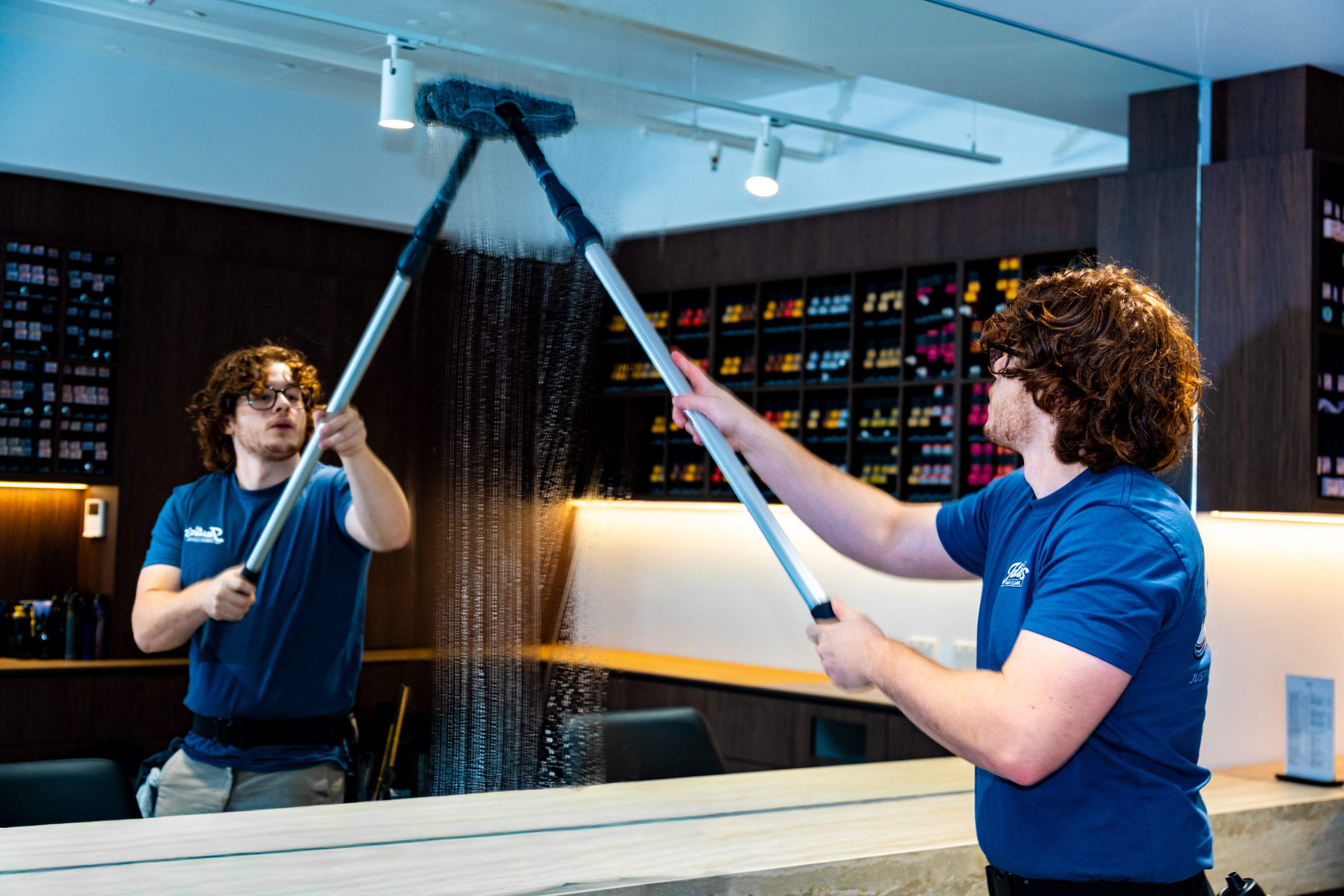
A soft bristle brush head agitates and lifts the grime without scratching the glass surface.
Ground-level operation where possible
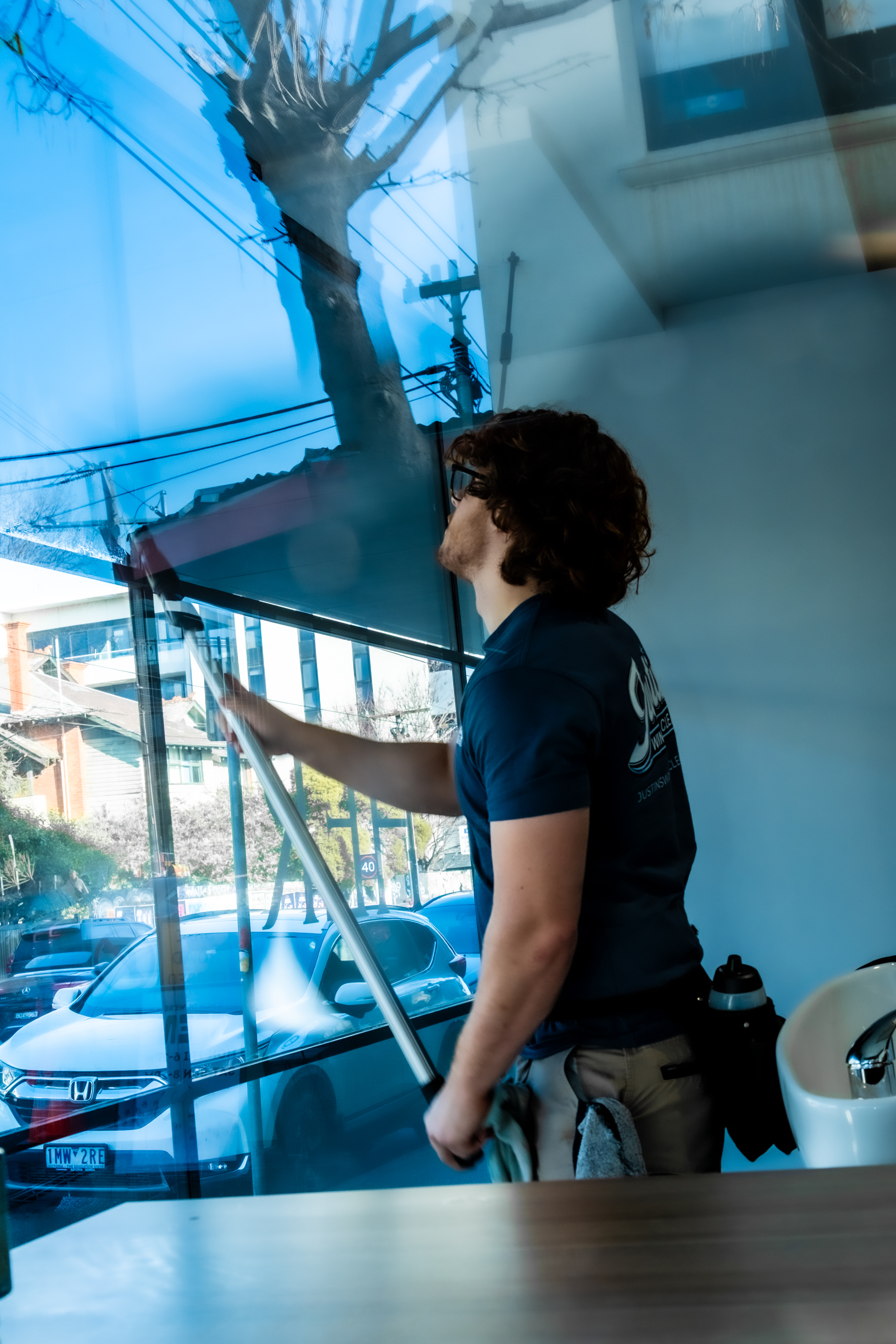
Water-fed poles allow most residential panels to be reached from the roof perimeter without walking on the roof, reducing both safety risk and the chance of panel damage.
Safety protocols
For panels requiring roof access, proper non-conductive equipment, roof boots and fall arrest systems are used.
Is it safe to clean solar panels yourself?
⚠ Strongly not recommended
The combination of roof height, wet surfaces, and live electrical equipment makes DIY solar panel cleaning genuinely dangerous. Wet solar panels are electrically live even if the inverter is off. Roof surfaces made wet by cleaning are slippery. Falling from a residential roof is a life-altering event. The cost saving versus a professional clean is not worth this risk.
How often should Melbourne solar panels be cleaned?
For most residential systems in Melbourne: once a year at minimum, ideally every 6 months. Panels near established trees (gum trees are particularly significant - sticky sap and bark debris), under flight paths or in coastal areas should be cleaned every 3–6 months.